Reeves quotes Kristof and WuDunn about the recent trend (which started in the 2010s): “Men in particular felt the loss not only of income but also of dignity that accompanied a good job.” from Tightrope: Americans Reaching for Hope, Nicholas Kristof and Sheryl WuDunn (p62)
Poor babies. Need I point out that women would not have felt that loss because they so often didn’t have an income in the first place or the dignity that accompanied a good job.
“Men are much more likely to commit suicide than women.” (p63)
Yeah. They are the weaker sex. And now, without the propping up a sexist advantage and priority, they are falling down.
I’ll add that my bet is that many a woman would’ve killed herself but for the kids she’d made and felt responsible for. Guess that doesn’t apply to men.
“Womanhood is defined more by biology, manhood more by social construction.” (p96)
What? Since when?
“This is why masculinity tends to be more fragile than femininity.” (p96)
I doubt that’s the reason. I’d point my finger at the fragile male ego? (Though yeah, I suppose it’s fragile only when idiot men accept that social construction.)
“When was the last “crisis in femininity”? That’s right: never.” (p96)
Um. Betty Friedan, The Feminine Mystique? Germaine Greer, The Female Eunuch? The whole frickin’ second wave of feminism?
[about the term ‘toxic masulinity’] “It is a bad idea to send a cultural signal to half the population that there may be something intrinsically wrong with them.” (p108)
Ya think? (How clueless can Reeves be to women’s history?)
“Half of American men and almost a third of women (30%) now think that society ‘punishes men just for acting like men’ …” (p108).
Well, if the shoe fits. (And what, society hasn’t punished women for being female for, like, forever?)
“Masculinity is not a pathology. … It is, quite literally, a fact of life.” (p108)
Could be both.
And from p150 on, Reeves’ proposals for getting more men into health, education, administration, literacy … They’ve always been in the first three, in the upper tiers. Regardless, Reeves, you’re about fifty years behind. Those of us against sexism said all this and more back in the 70s. Ever year of John Stoltenberg (Refusing to be a Man)? Robert Jensen (The End of Patriarchy)? Apparently not. They’re not even in his index of names. Not even Marlo Thomas’ “Free to be (you and me)”?
My overall response? ‘Been there, said that, you weren’t listening, and now you think you’re hot shit for saying it’.
“With AI, humanity is outsourcing its executive control of nearly every key sector —finance, warfare, medicine, and agriculture—to algorithms with no moral capacity.” Yves Smith
When will there be enough women on the Supreme Court?
Her answer: When there are nine.
“[L]egal challenges to undue restrictions on abortion procedures … center on a woman’s autonomy to determine her life’s course, and thus to enjoy equal citizenship stature …” Gonzales v. Carhart
[She wasn’t pleased with the argument of Roe v Wage b/c it focused on privacy instead of autonomy]
“[T]he ability of women to participate equally in the economic and social life of the Nation has been facilitated by their ability to control their reproductive lives …” Planned Parenthood of Southeastern Pennsylvania v. Casey
Put that way, rape should be mentioned as well as access to contraception and abortion (though it’s irrelevant to the case, I get that).
“The Court’s hostility to the right Roe and Casey secured is not concealed. Throughout, the opinion refers to obstetrician-gynecologists and surgeons who perform abortions not by the titles of their medical specialties, but by the pejorative label ‘abortion doctor’. A fetus is described as an ‘unborn child’ and a as a ‘baby’, second-trimester, previability abortions are referred to as ‘late-term’ and the reasons medical judgments of highly trained doctors are dismissed as ‘preferences’ motivated by ‘mere convenience’.” Gonzales v. Carhart
Indeed. The power of words. The importance of word choices.
“The pedestal upon which women have been placed has all too often, upon closer inspection, been revealed as a cage.” Reed v. Reed
I like that. Well-put.
“The decision whether or not to bear a child is central to a woman’s life, to her well-being and dignity. … When Government controls that decision for her, she is being treated as less than a fully adult human responsible for her own choices. Abortion prohibition by the State … controls women and denies them full autonomy and full equality with men.” Ginsburg at her Senate Confirmation Hearing, July 21, 1993
“Among the linguistic tics cadets most quickly acquire is the use of the noun female in lieu of woman. They see it in formal briefings and official documents, and they hear it in everyday conversation. Woman is by far the more usual choice in civilian culture, where female has at best a biological or zoological connotation and at worst a pejorative one. Yet female is ubiquitous in military culture. (The use of male as a noun is by no means commensurate.)”
“To my ear, female carries a pejorative air in this setting, yet its speakers don’t seem to hear the same thing. They’ve already been conditioned. Clinical, technical, bureaucratic—female ends up making a woman sound less like an individual human being and more like a participant in a laboratory experiment. ”
“…the rationale behind the application of an unambiguously restrictive term to women and men alike. It is as if the authors could not even conceive of appropriate conduct that wasn’t also, at bottom, the conduct of a gentleman, the conduct of a man.”
“The use of women and their reputations as a medium of exchange in a masculine commerce of honor has a long lineage. “
So I watched “The Assault” (on peacock) last night … about a cheerleader who gets raped by the team … sigh … but there was something that really made me stop and think. (Always a good thing.)
They claimed she consented, she was drunk/unconscious so even if she had consented, it would be considered invalid because when drunk, you’re incapable of consent. All good. (Well, sort of. I think it’s more complicated than that: as I argued in my Master’s thesis 30 years ago, I think consent is best conceptualized as continuum …)
But then one of the boys said “I was drunk too! Doesn’t that matter?” Fair enough. If we absolve the girl of responsibility for her behavior because she was drunk, shouldn’t we also absolve the boy of responsibility for his behavior because he was drunk?
But then I thought, hang on, if a man sets my house on fire when he’s drunk, he should still be held responsible. If a man beats me up and breaks my jaw when he’s drunk, he should still be responsible. If that’s what you do when you get drunk, don’t get drunk.
But no, wait, there’s an important difference: sex, unlike a house on fire and a broken jaw, is something one does, reasonably, consent to from time to time.
So, okay, solution: he should have to prove she consented. He’s the agent, the one who did something, so the onus on him is to prove it was acceptable. This should apply in non-drunk cases as well, I might add. The default should be ‘non-consent’–so he has to prove she said yes rather than, as is the case, she has to prove she said no.
(And it’s a reasonable default: with any given man, most women would not consent to sex. That is to say, most women want to have sex with far less than over 50% of men. Measured another way, that would include even partners, at any given moment, most women would not consent to sex. That is to say, most of the time, a woman isn’t interested in having sex. We might want to adjust the average for women at a certain age, as sexual desire does change over one’s life time, but still. A reasonable default, I think.)
But, what if the woman was the agent? What if she climbed on top, engulfed, then rode him? And both were drunk. Can she still claim rape?
So, back to the beginning, in addition to being drunk, does she need proof that she was not the agent?
“Adrienne Rich (1979) [commented that] objectivity is the name we give to male subjectivity.” Introduction, p5
“Anna Bexall (1980) [ has suggested that] males have a great emotional investment in objectivity.” Introduction, p5
“… the ways we have been ‘protected’ from obscenity, yet made the object of much of it.” from “A Thief in the House: Women and Language,” Mercilee M. Jenkins and Cheris Kramarae, p11
“For those of us who studied literature, a previously unspoken sense of exclusion from authorship, and a painfully personal distress at discoverin whores, bitches, muses, and heroines dead in childbirth where we had once hoped to discover ourselves …” from “Dancing Through the Mine-Field: some Observations on the Theory, Practice, and Politics of a Feminist Literary Criticism,” Annett Kolodny, p24
And almost 50 years later, that’s still all we see on tv, in movies, in video games.
“… what we are asking be scrutinized are othing less than shared cultural assumptions so deeply rooted and so long ingrained that, for the most part, our critical colleagues have ceased to recognize them as such.” from “Dancing Through the Mine-Field: Some Observations on the Theory, Practice, and Politics of a Feminist Literary Criticism,” Annett Kolodny, p29
What’s that thing about fish not knowing they live in water?
“It is,after all, an imposition of high order to ask the viewer to attend to Ophelia’s sufferings in a scene where, before, he’d always so comfortably kept his eye fixed firmly on Hamlet.” from “Dancing Through the Mine-Field: Some Observations on the Theory, Practice, and Politics of a Feminist Literary Criticism,” Annett Kolodny, p29
Read chris wind’s Soliloquies: the lady doth indeed protest.
“‘If Kate Chopin were really worth reading’, an Oxford-trained colleague once assured me, ‘she’d have lasted—like Shakespeare’; and he then proceeded to vote against the English Department’s crediting a Women’s Studies seminar I was offering in American women writers.” from “Dancing Through the Mine-Field: Some Observations on the Theory, Practice, and Politics of a Feminist Literary Criticism,” Annett Kolodny, p30
Clueless. Utterly clueless.
“We know from women’s autobiographies that most men kept back a portion of their wage, no matter how small, for the sake of ‘self-respect’, even though no such sum was either expected or given to women …” from “Women, Lost and Found: The Impact of Feminism on History,” Jane Lewis, p56
“[M]ale dominance is used to perpetuate male dominance …,” from “Education: The Patriarchal Paradigm and the Response to Feminism,” Dale Spender, p157
Posters, mugs, tshirts …
“Allowing females access but preserving the male ethos and definitions has been one way of ‘accommodating’ women without required modification from males” from “Education: The Patriarchal Paradigm and the Response to Feminism,” Dale Spender, p161
“[M]ost researchers do not even think it necessary to give reasons for excluding women.” from “Education: The Patriarchal Paradigm and the Response to Feminism,” Dale Spender, p163
“[M]any researchers have expressed surprise and bewilderment when they have ‘encountered’ women in their research and found the behavior of women inconsistent with or contrary to male predictions.” from “Education: The Patriarchal Paradigm and the Response to Feminism,” Dale Spender, p163
Clueless. So utterly clueless.
“A major debate has centred on whether law required moral content, but since the basic tenet of positism holds that law is the expression of the will of the soverign, that is, of those in power, the answer has been negative.” from ”Before and After: The Impact of Feminism on the Academic Discipline of Law,” Katherine O’Donovan, p177
Ah.
“Bentham, the revered founder of this school of thought, justified the allocation of power and superior legal rights to men on the pragmatic ground that they already had physical power …” from ”Before and After: The Impact of Feminism on the Academic Discipline of Law,” Katherine O’Donovan, p177
And so it should be just the opposite (since men have the advantage of physical power, give to women the superior legal rights), to balance, to compensate.
“In her analysis of the marriage contract, Lenore Weitzman has shown that the marriage contract is unlike any other. Its provisions are unwritten, its penalties are unspecified, its terms are unclear and the parties cannot either write their own terms or vary the existing terms.” from ”Before and After: The Impact of Feminism on the Academic Discipline of Law,” Katherine O’Donovan, p180
Yes indeed. I discovered this when I tried to find a copy of the marriage contract. Discovered that you can only find out the terms of the marriage contract by studying divorce law. (When you find out what’s considered a violation, you understand what’s considered a contractual obligation.)
“Turning to studies of our own species, is it an accident that scientists have been primarily interested in exploring contraceptive techniques that tamper with the female reproductive system, following the curious logic that because ‘fertility in women depends upon so many finely balanced factors … it should be easy to interfere with the process at many different stages …?’ Would it not be more sensible to conclude that it is more difficult and riskier to tamper with a woman’s reproductive system than a man’s because the eoman’s sstem is made up of ‘so many finely balanced factors?’ from “The Emperor doesn’t Wear any Clothes: The Impact of Feminism on Biology” Ruth Hubbard, p214 (the quotes are from Clive Wood, 1969)
“In it [a ‘matriarchal’ account of human reproduction by Ruth Herschberger in her 1948 Adam’s Rib], the large, competent egg plays the central role and we can feel only pity for the many millions of miniscule, fragile sperm most of which are too feeble to make it a fertilization.” from “The Emperor doesn’t Wear any Clothes: The Impact of Feminism on Biology” Ruth Hubbard, p229
“In her life time, an average woman produces about four hundred eggs, of which in present-day Western countries, she will ‘invest’ only in about 2.2. Meanwhile the average man generates several billions of sperms to secure those same 2.2 investments!” from “The Emperor doesn’t Wear any Clothes: The Impact of Feminism on Biology” Ruth Hubbard, p229
How can we explain this?
Most (if several is just 3 billion, that would be .00000007% ) of the sperms a man creates are losers.
She writes, regarding a creature with a radial form, “something like a five-armed starfish” … “But the radial pattern which had developed out of the budding spiral had remained throughout evolution and completely dominated all mental and psychic processes” (p11)
Is that why we’re so obsessed with binary? right/left, right/wrong, on/off, male/female, in/out …
“If alternative means, not one of two, but one, two, three or four out of five, then action is complicated and slowed to the kind of tempo and complexity which is appropriate to an organism with many hundreds …” (p18)
"We License Plumbers and Pilots - Why Not Parents?"At Issue: Is Parenthood a Right or a Privilege? ed. Stefan Kiesbye (Greenhaven, 2009); Current Controversies: Child Abuse, ed. Lucinda Almond (Thomson/Gale, 2006); Seattle Post-Intelligencer (October 2004)
"A Humanist View of Animal Rights"New Humanist September 99; The New Zealand Rationalist and Humanist Winter 98; Humanist in Canada Winter 97
have been previously published in Canadian Woman Studies, Herizons, Humanist in Canada, The Humanist, and The Philosopher's Magazine - contact Peg for acknowledgement details.
ImpactAn extended confrontation between a sexual assault victim and her assailants, as part of an imagined slightly revised court process, in order to understand why they did what they did and, on that basis, to make a recommendation to the court regarding sentence does not go … as expected.
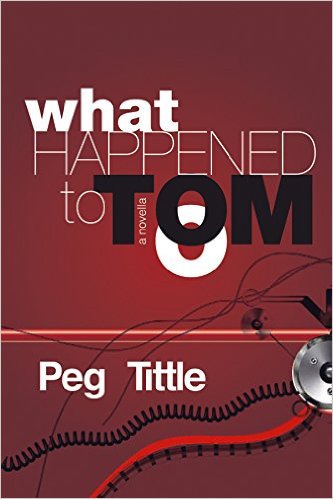
What Happened to TomTom, like many men, assumes that since pregnancy is a natural part of being a woman, it’s no big deal: a woman finds herself pregnant, she does or does not go through with it, end of story. But then …
Aiding the EnemyWhen Private Ann Jones faces execution for “aiding the enemy,” she points to American weapons manufacturers who sell to whatever country is in the market.
Bang BangWhen a young boy playing “Cops and Robbers” jumps out at a man passing by, the man shoots him, thinking the boy’s toy gun is real. Who’s to blame?
ForeseeableAn awful choice in a time of war. Whose choice was it really?
Exile (full-length drama) Finalist, WriteMovies; Quarterfinalist, Fade-In.
LJ lives in a U . S. of A., with a new Three Strikes Law: first crime, rehab; second crime, prison; third crime, you’re simply kicked out – permanently exiled to a designated remote area, to fend for yourself without the benefits of society. At least he used to live in that new U. S. of A. He’s just committed his third crime.
What Happened to Tom (full-length drama) Semifinalist, Moondance.
This guy wakes up to find his body’s been hijacked and turned into a human kidney dialysis machine – for nine months.
Aiding the Enemy (short drama 15min)
When Private Ann Jones faces execution for “aiding the enemy,” she points to American weapons manufacturers who sell to whatever country is in the market.
Bang Bang (short drama 30min) Finalist, Gimme Credit; Quarter-finalist, American Gem.
When a young boy playing “Cops and Robbers” jumps out at a man passing by, the man shoots him, thinking the boy’s toy gun is real. Who’s to blame?
Foreseeable (short drama 30min)
An awful choice in a time of war. Whose choice was it really?
What is Wrong with this Picture?
Nothing. There’s no reason women can’t be the superordinates and men the subordinates. But life’s not like that (yet).
Minding Our Own Business A collection of skits (including “The Price is Not Quite Right,” “Singin’ in the (Acid) Rain,” “Adverse Reactions,” “The Band-Aid Solution,” and “See Jane. See Dick.”) with a not-so-subtle environmental message
Rot in Hell A soapbox zealot and an atheist face off…